DockTalk listens to marine VHF radio around the clock: Coast Guard rescues, tug captains threading a channel, kids sneaking onto Channel 16. AI turns it into moments you can hear, watch on a live map, and follow as they unfold.
Marine radio is 23 hours of routine and one hour of the most real audio on earth. Nobody can sit and listen all day, so our AI does, on every channel at once. Here's the app, exactly as it looks.
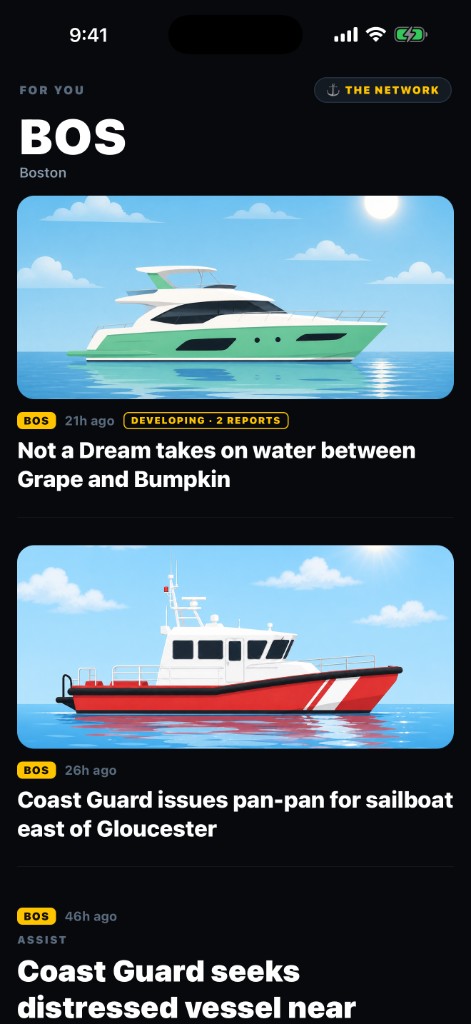
Open the app and the day's most gripping radio is already waiting, headlined, summarized, and ranked by AI minutes after it hits the air. A boat taking on water, a pan-pan east of Gloucester, kids sneaking onto Channel 16. Developing incidents grow chapters as new reports come in, so you follow the story, not the static.

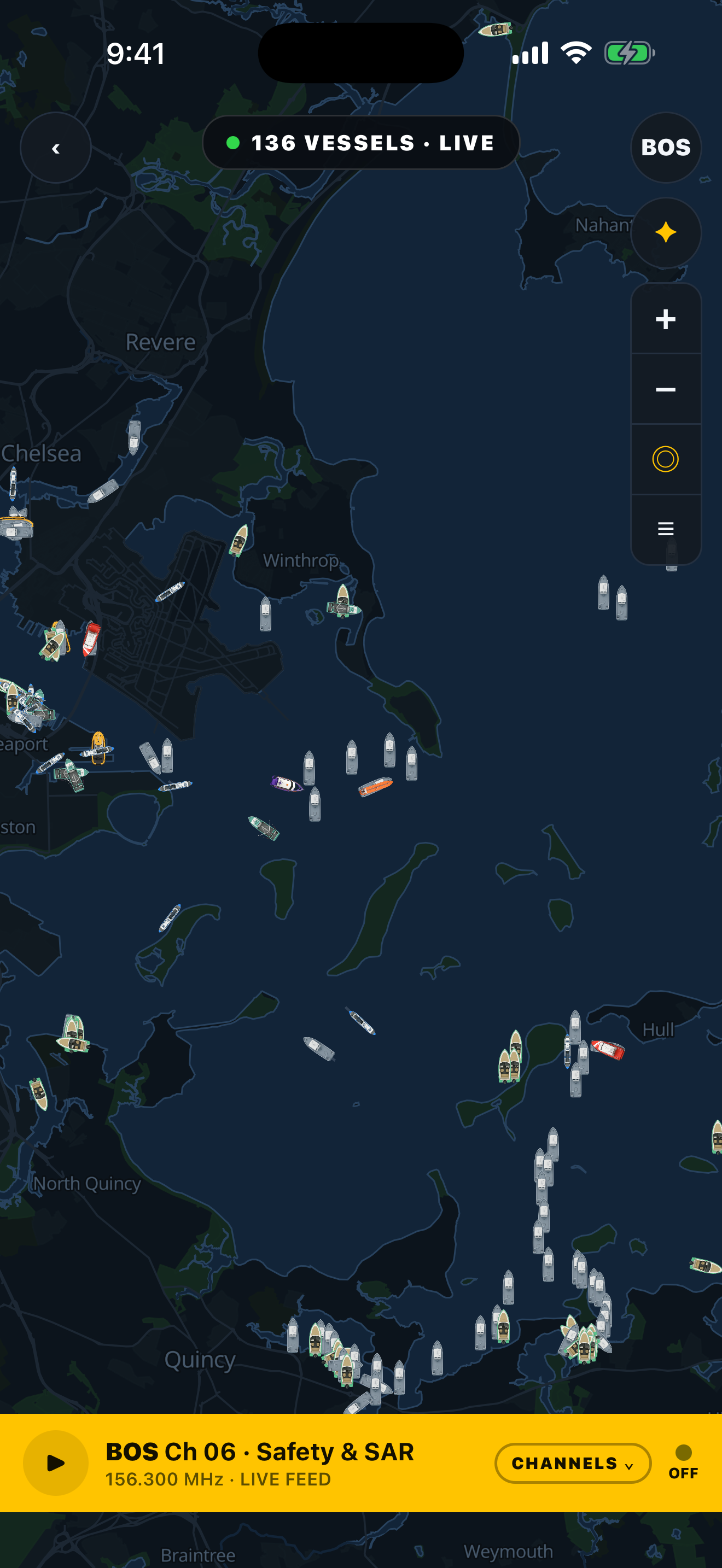
A real-time chart of the whole harbor, every ferry, tanker, tug, and fishing boat, and you can listen to any of the 16 working channels while you watch. When a vessel keys its mic, it lights up on the chart with live captions, so you always know who's talking and where they are.


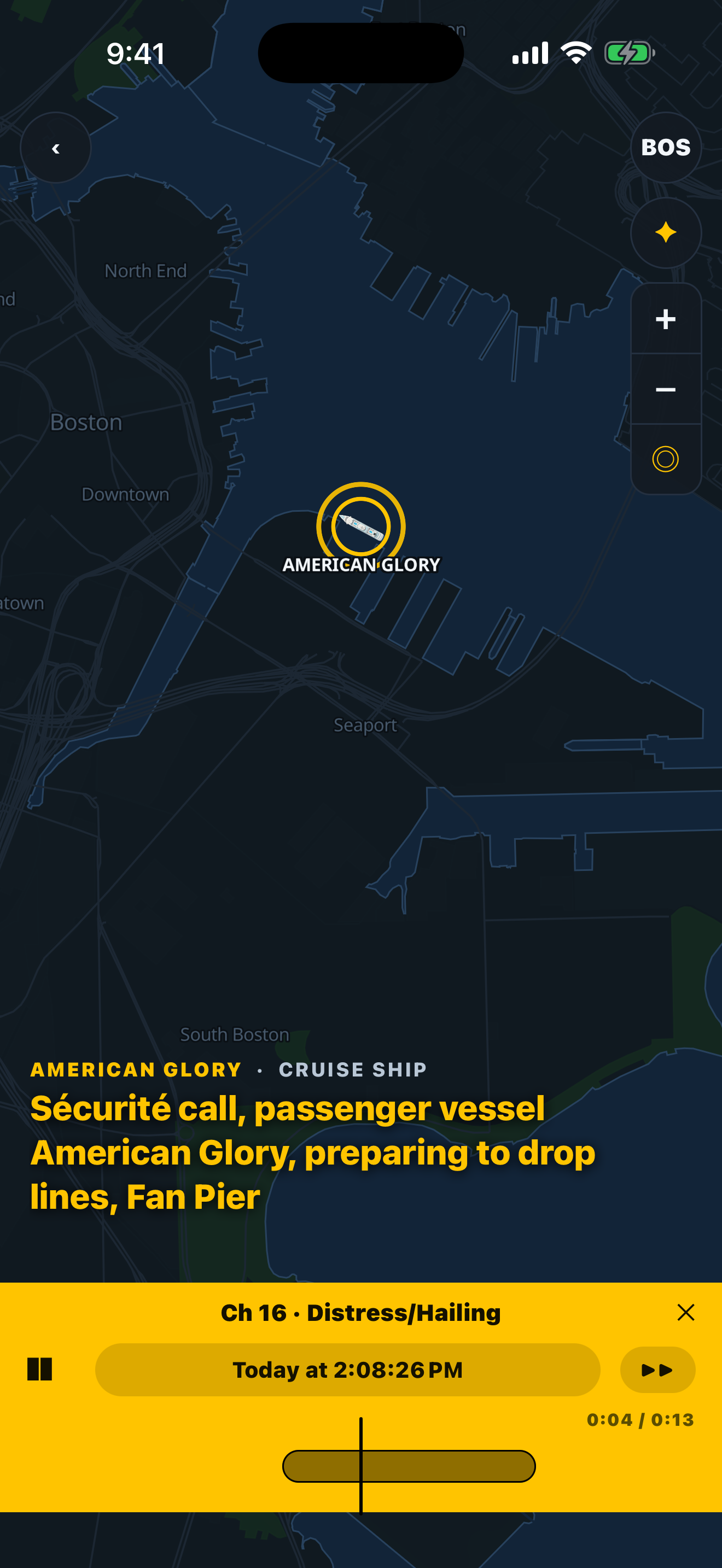
This one is not a screenshot. It's a real rescue our Boston receiver captured on Channel 16: Not a Dream, seven aboard, taking on water between Grape and Bumpkin Islands. Press play: the captions run, whoever's talking glows on the chart, and you can drag the tape to scrub. This is exactly what a moment feels like in the app.
Our AI listens to every channel around the clock and pushes a notification the moment something serious airs in your harbor: a mayday, a pan-pan, a capsize, a vessel taking on water. You hear about it while it's still happening — not in tomorrow's news.
The Coast Guard airs the same Sécurité five times, and you're never on 16 when it matters. DockTalk distills every official broadcast into a running bulletin: the hazard, the place, the time window — debris in the channel, live-fire exercises, a sunken buoy — with re-airings folded into one row and the original broadcast one tap away. Check it with your coffee before you cast off.
A scanner is ephemeral: blink and it's gone forever. DockTalk keeps everything. Scroll back, press play — with captions, so you can read what was said even when the dock is loud. Every incident becomes a story with chapters as follow-ups air, so you catch up on the whole thing in one listen.
Every DockTalk receiver demodulates every working channel at once — hailing, bridge-to-bridge, Coast Guard, the fishing fleet, the marina's working channel — and streams them live to any phone. Hear the harbor from the couch, the car, or the cockpit at midnight.
Six real events, captured by DockTalk receivers in the last weeks, drawn exactly as the app replays them. Press play on any card: that's the actual radio, captions running in time with the audio, whoever's talking lit up on a real chart.
Every harbor needs one thing: a small receiver near the water. Host one and your node becomes that harbor's ears, with your name on everything it hears first.
While your receiver is on watch, your DockTalk subscription is on us. The network exists because of hosts. Hosts don't pay.
Moments your node captures first are credited to it in the app, and the network leaderboard ranks nodes by hours on watch and moments heard.
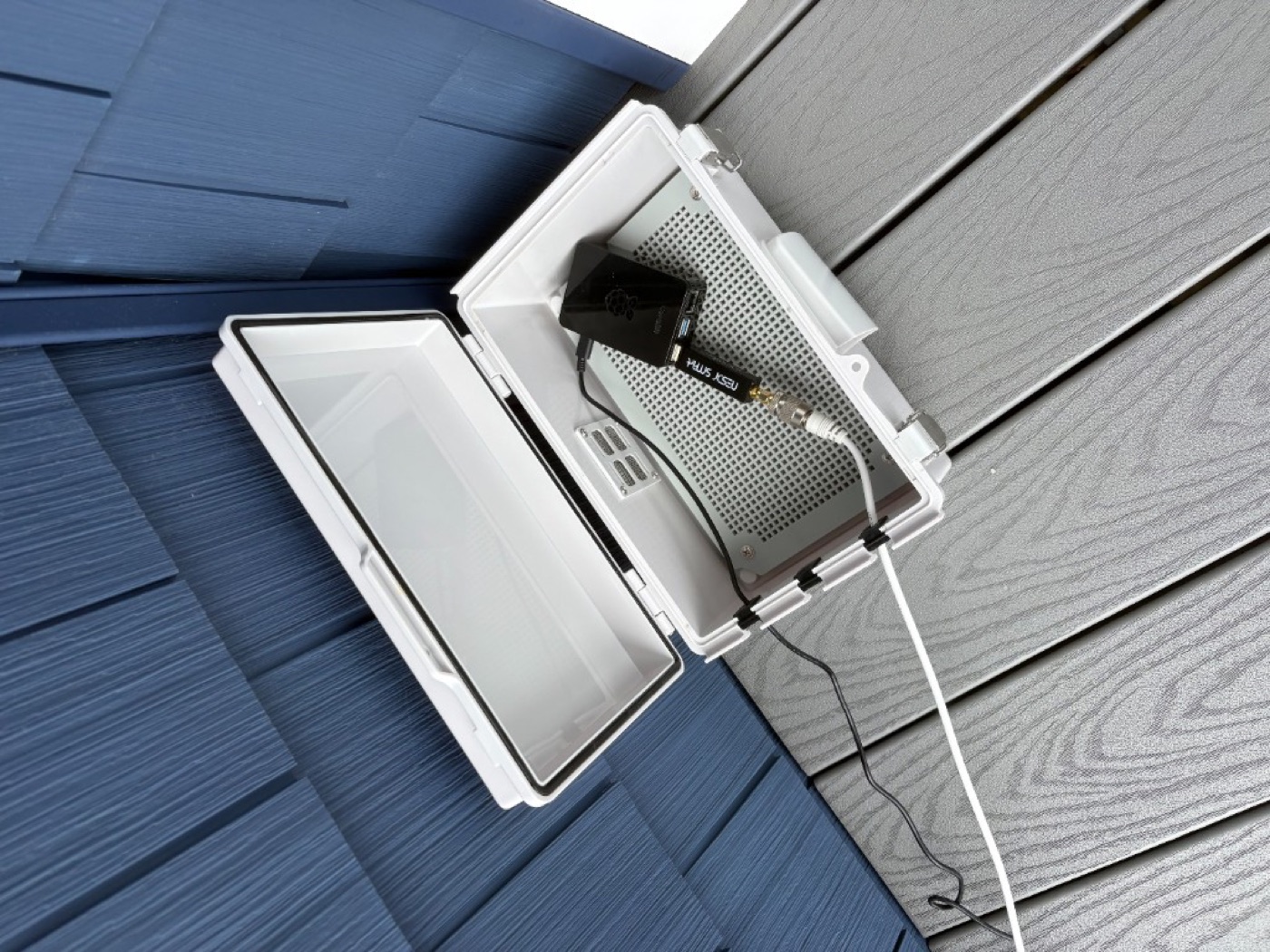
Plug it in and forget it. Health checks, updates, and channel plans are managed remotely. If it goes offline, it recovers on its own.
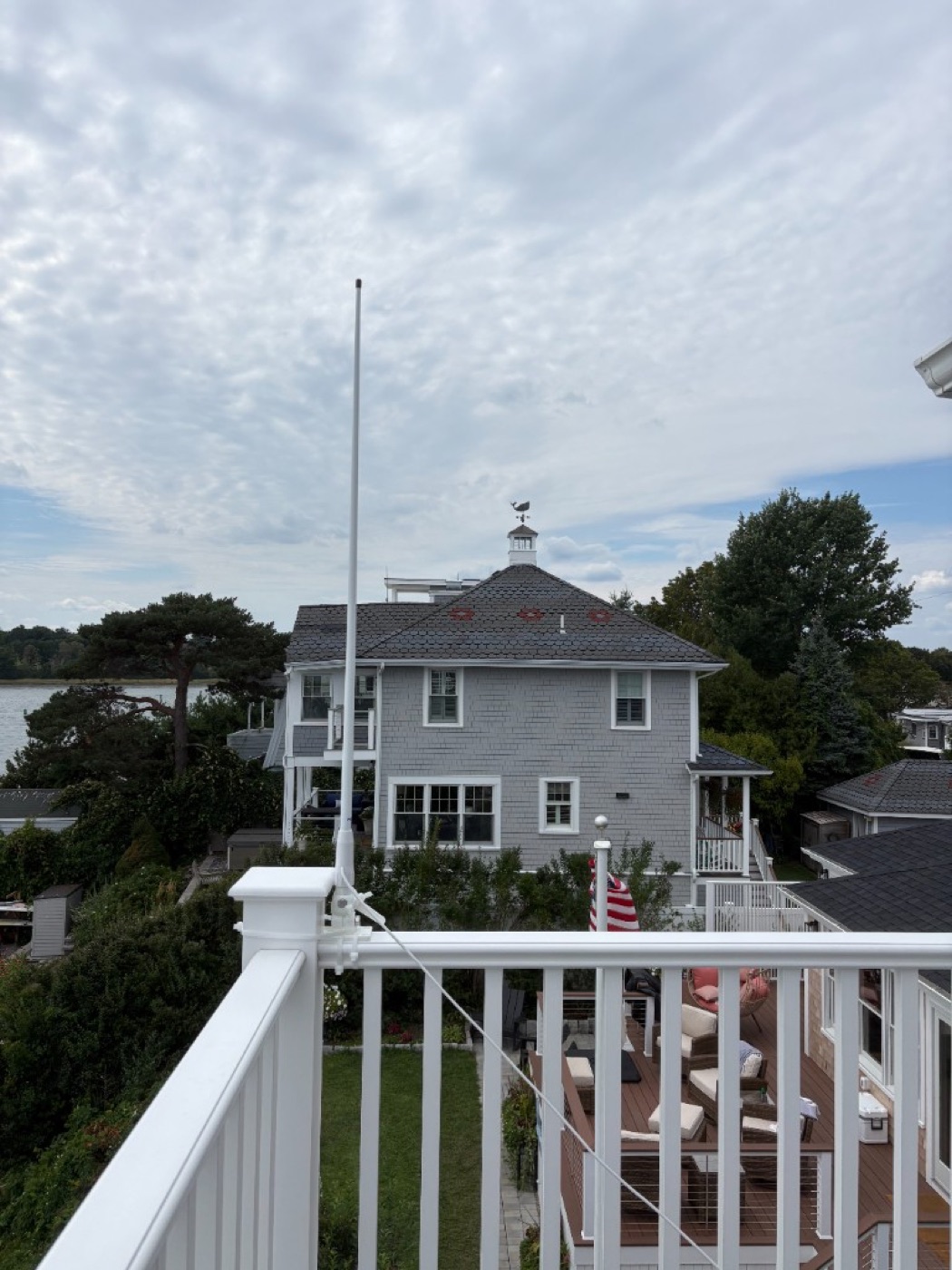
Waterfront home, marina office, liveaboard slip, a rooftop with a clear shot at a busy harbor we don't cover yet: for locations like these we pay for the entire kit and ship it to your door. Apply below and tell us about your view; if the spot is right, it costs you nothing but a power outlet.
Every node, ranked by time on watch. This is live, and one name is getting lonely up there. Ranks are earned the old way, hours on watch, from Deckhand all the way to Commodore. Every seat below is open — the full board with badges and commission numbers lives at docktalk.app/leaderboard:
Just plugged yours in? This page is your proof: your node appears within a minute of joining, and each channel chip turns green as its audio starts flowing.
If you feed aisstream.io, MarineTraffic, VesselFinder, or FlightAware, your rooftop already has the two things that matter: a sightline to the water and an always-on Pi. DockTalk doesn't touch your existing feed. AIS is position data; we collect the other layer. The voices.
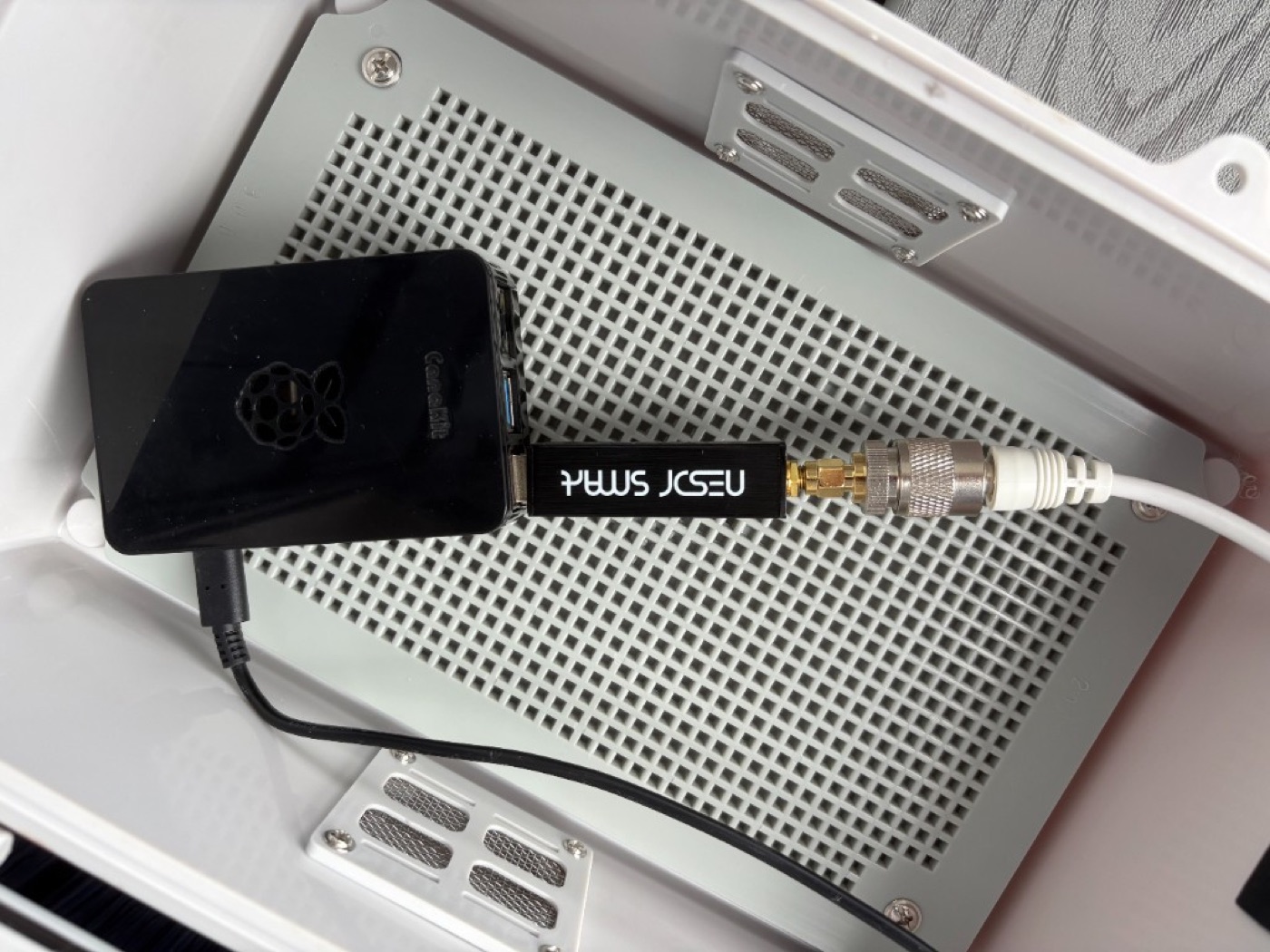
Marine VHF voice (156 to 157.4 MHz) sits right next to the frequencies your antenna already covers. Add one $45 dongle, or a spare Pi, and you're a DockTalk node too.
DockTalk is a company, not an open-data project, so audio goes only to our network. In exchange: hardware free for good sites, lifetime Pro, first-heard credit on every moment, and a say in what we build.
Your claim code comes from the application below. Fill it out (30 seconds), and if your site qualifies we email you a one-use code like DT-7K2M-P9XW. Paste this on the Pi with your code. It pulls the receiver as a prebuilt, versioned package, joins the network, and puts your name on the leaderboard. About five minutes, hands off, and it keeps itself updated from then on.
No Pi? The command isn't picky. It runs on any Debian or Ubuntu Linux machine with a free USB port: the old laptop in a drawer, a mini PC, the home server in your closet. You still need the receiver dongle and antenna from the kit list below, about $112. Only have a Mac or Windows machine? Grab the $53 Pi from the kit. It is the cheapest computer you can leave on 24/7 anyway.
Ham operator? Marine VHF sits just above the 2m band, so the vertical on your mast already hears it. There's a page written for you: docktalk.app/hams.
Curious what's under the hood first? How nodes work covers the architecture and security model. When your kit arrives, the step-by-step setup guide walks every click.
Request a claim codeThis is node 1, the receiver covering Boston Harbor right now from a house in Hull, MA. About $165 of off-the-shelf hardware, no soldering, no tools. Every connector is hand-tightened.
Fill out the form below. You'll know instantly if your spot qualifies. We reply with your personal claim code.
When the kit arrives, open the step-by-step guide. It walks every click: flashing the card, plugging it together, connecting from your computer. Nothing assumed, fixes for every common stumble included.
The single install command we send you does the rest. About five minutes later it prints VERIFIED, your harbor's 16 channels are flowing, and your name is on the leaderboard below.
Tell us about your spot. Marine VHF is line of sight, so what matters is simple: how close to the water you are and where an antenna can live. You'll get an instant read on whether your site qualifies.